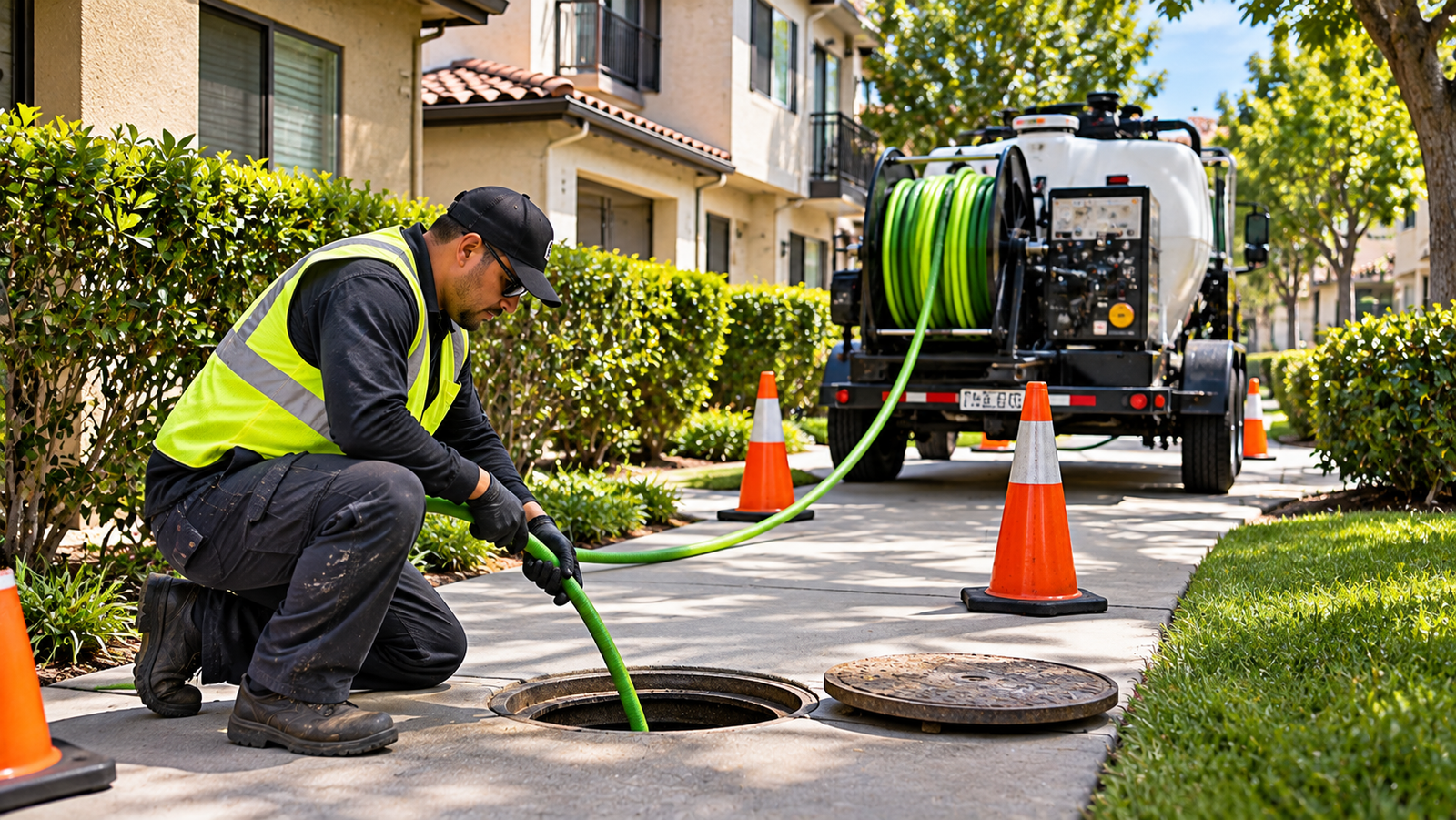
When several homes in a condo community report recurring backups, management needs to know which drain lines are affected and how crews can reach them. A community-wide hydro jetting plan makes it easier to approve the work, coordinate access, and track what was completed.
Define the lines included in the work
Start with the locations and dates of recent backups, any existing drain maps, and known cleanout locations. Ask the contractor to identify the buildings and shared lines included in the estimate. If the association also needs storm drain cleaning, list that work separately from sanitary sewer cleaning so the board can see the scope of each.
Set a schedule residents can follow
Group the work by building and identify where crews will need access to units, garages, or exterior cleanouts. Give residents the date, an estimated work window, and any instructions for their unit. Keep a list of locations that need a return visit so management can track them after the main work is finished.
Ask for a record of the findings
Hydro jetting uses high-pressure water to clear buildup inside a drain line. A sewer camera inspection can help document conditions such as root intrusion, damaged piping, or standing water in sections with recurring problems. Ask for a closeout report that identifies the lines cleaned, the areas still pending, and any locations recommended for further inspection or repair.
One Stop Source performed community-wide hydro jetting at The Springs in Irvine. If you’re planning drain maintenance for your HOA, tell us which buildings are affected and where you’ve had repeat backups. Community hydro jetting services · Request an estimate
---
Every property and service situation is different. If you need help assessing a specific issue, contact our team to discuss the location and next steps.
Frequently asked questions
What is hydro jetting?
Hydro jetting uses high-pressure water to help restore drain flow by clearing roots, grease, and other debris from the line.
How often should we hydrojet our sewer and storm drains?
Annual sewer-line cleaning is recommended. Inspect and clean storm drains at least once a year in late summer or early fall, before the rainy season. Properties with recurring problems or heavy debris may need more frequent service.
When is a sewer camera inspection useful?
A camera inspection can help document pipe conditions when backups repeat or when cleaning reveals concerns such as roots, damage, or standing water.